Mobile camera units using AI coming to Mississippi roadways
>
News>
Mobile camera units using AI coming to...
(Photo from Acusensus website)
- The Mississippi Department of Public Safety says new surveillance technology will aid law enforcement by providing a real-time feed of traffic violations, including seat belt and cell phone use, but some lawmakers have expressed privacy concerns.
The Mississippi Department of Public Safety is deploying cameras using artificial intelligence to actively monitor roadways across the state.
The Mississippi Department of Information Technology Services Board approved a sole source contract with Acusensus Inc. on Thursday to lease mobile, multi-violation detection, and real-time enforcement systems. DPS can now execute the contract.
The trailer-based systems, according to the company, captures high resolution, prosecutable evidence of individuals undertaking illegal driver behavior, in all weather conditions, and operates autonomously to capture photographic evidence, automatically detecting illegal driver behavior.
DPS says the technology will aid law enforcement by providing a real-time data feed of traffic violations that pertain to seatbelts, mobile phone usage, speeding, and out-of-service vehicles, among other offenses.
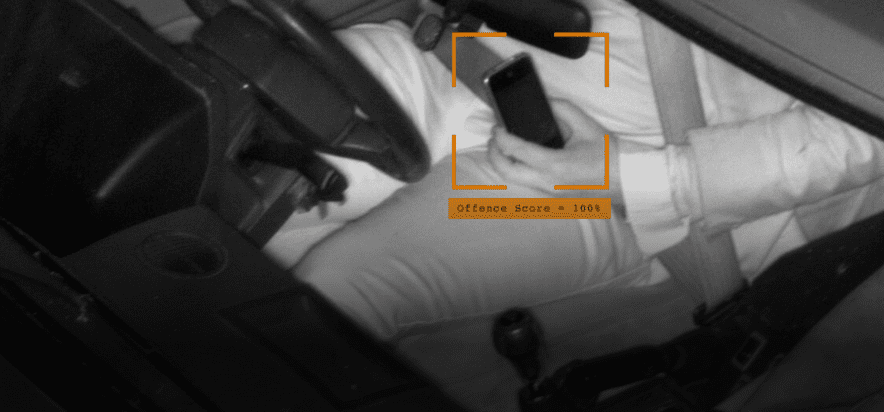
Acusensus Inc. was selected as the sole-source provider of the system after officials verified that the company is currently the only entity providing the exact technology. The contract is for a total 3-year lifecycle with a cost of $2,052,000, funded through federal grants acquired by DPS. DPS will not be responsible for moving the trailer systems as the contract provides for 52 moves per year per trailer, which is executed by the company.
DPS plans to utilize the technology to monitor and predetermine problematic roadway locations that need additional surveillance. Major Scott Henley with DPS told the ITS Board that the system would be deployed in high crash corridor areas where officers cannot routinely work due to construction zones or other impediments to patrolling.
“It will catch driving behaviors. The AI will actually capture it and send it downstream to an officer sitting downstream,” Henley said. “The officer will determine if it is a valid violation for a stop and at that point the officer will actually stop the car and issue a citation in real-time. The whole goal is to change driving behaviors and reduce crashes.”
Acusensus, which was first deployed in Australia, touts the system’s ability to capture images day or night in almost any weather conditions (including sun glare) and detect vehicles travelling up to 300km/hour or approximately 186 miles/hour without motion blur and without distortion via high-performance sensor technology. The company also says its advanced automated recognition system minimizes false positives while ensuring no true offenses are discarded.
Henley said the new technology is now being used in five states, with preliminary data showing that it has helped reduce accidents and assisted officers in increased traffic control. With cameras recording and sending data from above roadways in real-time, Henley said the officers will be able to spot the truck driver on his cellphone or the children standing in seats unbuckled.
ITS Board member Mark Henderson implored DPS to report violation rates and other data on a quarterly basis so the Board and the public could judge the effectiveness of the system.
Lawmakers React
House Ways and Means Chairman Trey Lamar (R) told Magnolia Tribune Thursday that while he was just learning about the new technology, “our citizens right to privacy is very important.”
“I expect the Legislature to investigate the use of these cameras to ensure that the constitutional rights of our citizens is not infringed upon,” Lamar said.
His colleague in the House, State Rep. Dan Eubanks (R) agreed.
“Cameras armed with AI, peering into your car and processing your actions, invading your privacy, and then signaling a live officer down the road to pull you over and issue citations and/or make arrests in real time. It’s a very slippery slope with frightening ramifications,” Eubanks said. “Every American citizen has a Constitutional right to face his or her accuser. This begs the question, is that accuser some ambiguous AI positioned and aimed to stare into your vehicle and at your lower regions, or the officer who didn’t physically witness the offense but is now writing you the ticket or making the arrest at the behest of that Artificial Intelligence?”
Eubanks added that these type measures which erode into privacy rights and freedoms “are always pushed under the guise of public safety.”
Over in the Senate, State Senator Joey Fillingane (R) said so long as these new AI camera devices are used for traffic flow in public safety related issues, he would not personally have any objections.
“However, if they are ever to be used to issue tickets and mail those to you in your mail without having an officer actually writing those tickets as they do sometimes in places like Florida, then I would be opposed to that usage,” Fillingane said.
Editor’s Note: This article has been updated to include reaction from lawmakers.
About the Author(s)
Frank Corder is a native of Pascagoula. For nearly two decades, he has reported and offered analysis on government, public policy, business and matters of faith. Frank’s interviews, articles, and columns have been shared throughout Mississippi as well as in national publications. He is a frequent guest on radio and television, providing insight and commentary on the inner workings of the Magnolia State. Frank has served his community in both elected and appointed public office, hosted his own local radio and television programs, and managed private businesses all while being an engaged husband and father. Email Frank: frank@magnoliatribune.com
More Like This
 News | •
 June 19, 2026
Tropical storm remnants drench Gulf states after tornadoes hit the Midwest
Arthur was the first tropical storm of the season in the Atlantic basin, and although it quickly downgraded within a day of forming, the lingering system created dangerous conditions in Louisiana and Mississippi.
Previous Story
 DC | •
 June 18, 2026
Wicker questions Iran deal, opposes U.S. lifting any sanctions
Next Story
 News | •
 June 18, 2026
Budget for Mississippi universities increases 14%, now up to nearly $6.7 billion
 News | •
 June 19, 2026
Magnolia Mornings: June 19, 2026
Important state and national stories, market and business news, sports and entertainment, delivered in quick-hit fashion to start your day informed.
 Sports | •
 June 18, 2026
College sports bill clears key Senate hurdle despite SEC, Big Ten opposition
While President Donald Trump has backed the bill, multiple Republicans opposed the legislation Thursday, while several Democrat supported it. Some of the senators who voted against the bill represent states that are home to prominent SEC and Big Ten programs, including Michigan Sen. Gary Peters, a Democrat, and Republican Sens. Todd Young of Indiana and Roger Wicker of Mississippi.