How sex work saved my investigative journalism career
In this week’s Culture Bite, Bension Siebert explores the career-defining events that led him to sex work and why investigative reporting often gets censored in Australia.
0:00
-14:51
Audio playback is not supported on your browser. Please upgrade.
I was scrolling news apps, earphones in, on the tram into work one morning last year when Sally Sara stopped talking and my phone buzzed.
It was my boss’s boss (unusual, but not alarming).
I picked up the call and her tone was sombre.
She was sorry. There would be a meeting. I could bring a support person.
“Your position will be affected.”
It was the highest rung on a professional ladder I started climbing aged 17, and I’d invested far too much of my self-esteem in it.
The phone call ended and I got off the tram – a 31-year-old man, crying in public for the first time.
I called my Mum. I called my Dad.
At my redundancy meeting the following day, the executive across the table and the HR person on the big screen said my work had been excellent.
This was just about the direction of the business, they said.
I was not being made redundant; my role was.
That last line sounded like a distinction without a difference, but the nice thing about involuntary redundancy is that they give you money to fuck off.
So it was not really for the money when, the following week, I uploaded some of my nudes to an escorting website and Ubered to a stranger’s apartment; carrying the mental equivalent of keys between my fingers; performing false confidence.
The client was a wealthy, time-poor consultant who appreciated the convenience of ordering a chosen man to his door rather than trying to find one on Grindr.
I dissociated a little as I did what he’d paid for, recalling my first Grindr hookup: I didn’t exactly enjoy the experience, but it was okay-enough to confirm something I’d suspected for a long time.
Afterwards, with a dozen $50 notes neatly folded in my pocket, washing my face and hands over and over again in the bathroom sink of a nearby café, I thought: I actually did that.
And I kind-of liked it.
And I could do it again.
But becoming a sex worker was not my back-up plan – or, not yet.
If anything, crossing this particular line was a fuck-you to the respectable, professional mask I’d worn for more than a decade in the Australian media.
I was screaming into the abyss over the unfulfilled terms of that deal so many of us middle-class Millennials thought we were signing up to after high school:
You go to uni, you get the job, you climb the ladder, you lick the boot, you bend the knee – but not in the fun way – and if you work hard enough, you get the “dream job”, and buy the house, and have the kids, and retire, comfortably.
By then (surely!) you’ll be satisfied that dedicating most of your waking hours in this short lifetime to the fundamentally authoritarian employer-employee relationship was not only compulsory, but worth it.
Employers were not holding up their side of the bargain and I was sick of holding up mine.
Lest someone bring out the tiny violin, I know these sentiments come from a place of privilege.
But right at that moment, it felt like the foundations of my life were crumbling beneath me, and I was terrified.
In the weeks that followed, I pulled myself together and did what you’re supposed to do.
I called my contacts, “leveraged my network” and tried to land on my feet, quickly.
But my heart wasn’t in it, and my chosen industry was looking pretty grim from the outside.
Every time I typed “journalist” into a LinkedIn job search, AI companies were competing with news organisations for ad space.
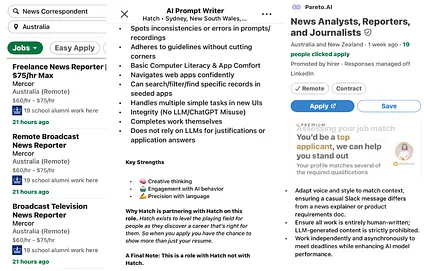
I had no intention of betraying everyone I’d ever worked with, and myself, by training large language models to do journalism.
But I was also not applying for many of the perfectly human, daily news reporter jobs I had every chance of getting.
I figured, if I’m never going to have real job security or a serious path to home ownership, I may as well try to get the most meaning and purpose I could out of what remained of my working life.
For me, that meant investigative journalism.
I had done plenty of it, and I was proud to have exposed abuse, neglect and avoidable deaths in the health system; lies, corruption and misconduct in government; exploition of vulnerable people online; and corporate complicity in alleged sexual assault.
But the manic demands of the 24-hour news cycle (despite the best efforts of my editors) meant that some of this work (and on some stories, most of this work) happened after hours, in unpaid overtime.
What I had desperately wanted was one of those rarely-advertised gigs where investigative journalism is your actual, full-time day job.
So while the redundancy money lasted, I put everything I had into applying for them.
Unfortunately, most days, I would rather self-immolate than write a cover letter.
And to apply for these particular jobs meant competing against some of the most impressive and capable professionals in my industry.
I have never, ever experienced such extreme imposter syndrome.
But I had some awards, real world change had happened because of my reporting and I’d crowdfunded to study investigative reporting at Columbia University.
I thought that maybe, just maybe, I had a shot.
I came second in one. I was “well-respected, but just not senior enough” for another. No response from the rest.
I seriously considered abandoning this journalism career I’d spent my entire adult life building.
I was as surprised as the next guy to find that becoming a sex worker might just save it.
A cheat code to capitalism
As the redundancy money began to dry up, I re-published my escort profile and started seeing clients regularly.
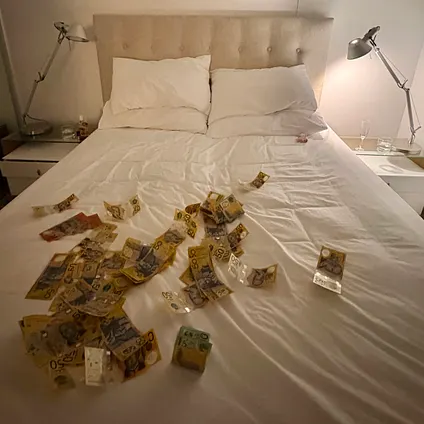
I discovered I could earn as much in five hours of sex work as I earned in my best-paid week as a journalist.
Occasionally, a particularly wealthy client would spend a few thousand dollars on me in one booking.
It was like I’d stumbled onto a cheat code to capitalism.
Some of my core skills as an investigative journalist – convincing people to trust me, absorbing strangers’ traumas, and completing important work to a high standard by deadline – were coming in handy.
I felt relatively safe doing the work, being bigger and stronger than most of my clients, and I had it easier than a lot of other sex workers because of my many privileges.
But what surprised me most was all the meaning and purpose I was finding in it.
One of my clients is a neurodiverse man in his forties who wanted to try anal sex for the first time.
He booked me for two hours. I made sure he felt comfortable, safe and sexy as we discussed what would happen. I taught him how to prepare.
I did everything in my power to make sure his first time was a good one, and it was.
Afterwards, he told me our session was one of the most important events of his life, allowing him to see a future for himself he could not see before.
Another of my clients is a man in his seventies.
When he was growing up, his sexuality was both illegal and taboo, and as society changed, he remained stuck in a sense there was something fundamentally wrong with him because he was gay.
On the rare occasion he ventured to try physical intimacy with a man, these experiences mostly made him feel worse.
He was looking for trust, acceptance and non-judgement, and hoped a sex worker might help him overcome some of his internalised homophobia and heal some trauma.
I was proud to be that person for him.
It was meaningful, purposeful work.
(Both men gave consent for me to discuss them in this piece.)
Meanwhile, there was something radicalising about not having traditional employment and, yet, everything kind-of being okay.
Sex work is often difficult and sometimes dangerous work but, in many ways, I felt better off.
I had no current or future boss to impress, no job application to agonise over and no looming end of a short-term contract to fear.
I had complete control over when to work and when to rest, and lots of spare time.
I had some choice about my pay and near-total control over my conditions.
I could pursue my hobbies, and a full social life, and a full love life, and prioritise things I had always been too busy for.
But I could not let journalism go.
A shameful secret of the Australian media
Like most journalists, I know about important stories that have never been told.
One, in particular, was nagging at my conscience.
It was story about systemic abuse, allegedly perpetrated over years against many vulnerable people, which I’d worked on for a previous employer.
After months of investigation, and despite strong evidence for the allegations at its centre, this previous employer chose to kill the story, citing legal risk.
Stories like these – never published, or published with the most damning details amputated – are a shameful secret and an unfortunate reality within many Australian news organisations.
We still see plenty of brave publishing decisions from media outlets with the investigative resources and the chutzpah to risk them.
And I’m grateful to each of my former employers for the significant legal and financial risks they have taken to publish my investigative work over the years.
But too often, the gap between what news organisations know and what they end up publishing is shamefully wide.
As the economic foundations of the media industry have crumbled, the incentives to self-censor have become increasingly acute.
The decision to spike this particular story was well-outside of my control, but I still felt ashamed.
The alleged perpetrator still had vulnerable people in their care and every system and institution meant to prevent, stop or force accountability for this kind of conduct, including the media, had failed.
So, with a newfound abundance of spare time, and no fucks to give (I sell them now) I asked my former employer for the rights to the story and revived the investigation.
I hoped to gather so much additional evidence and apply such strict rigour to my reporting that no rational person would bring a defamation case against it.
I set up sex work bookings, in advance, to pay for interstate reporting trips.
I met with sources, recorded interviews and collected evidence by day, and earned my travel and accommodation budget by night.
Several of my exceptionally talented producer and journalist friends volunteered to help make the story into an investigative podcast.
It’s one of a handful of long-term investigations I intend to eventually publish, with or without the support of a mainstream media organisation.
‘Let’s make you very famous, shall we?’
Not all of my clients have been perfect angels.
One Saturday evening, I was not available for a booking when a prospective client wanted me to be.
So he did some investigating of his own.
Using simple software, he discovered my real name and found out that I was a journalist.
He sent me a series of threatening messages, promising to out me as a sex worker, among other scary things.
‘Let’s see how your digital content and journalism career stacks up with this fact next to it,’ he wrote.
‘Let’s make you very famous, shall we?’
He used multiple phone numbers to conceal his own identity, but I have since learnt that a client who later booked me multiple times was, in fact, that man.
If he happens to be reading this: I know who you are. Nothing further will come of this as long as you leave me alone. Please.
I always knew that advertising my services online, even under an alias, carried obvious risks.
But this person had shown there was a now-permanent digital trail, leading directly from my sex worker identity to my real identity – and that someone might want to use that truth against me.
This essay is me beating him to it: I am proud to be a sex worker.
And I have some reason to hope that my digital content and journalism career stacks up just fine with this fact next to it.
One of the more moving interviews I ever did on the Briefing was with Victorian MP Georgie Purcell, who was outed without her consent as a topless waitress while she was going through law school.
In 2021, after almost a decade living in fear that her past could be used against her, she decided to reclaim her autonomy by voluntarily outing herself in an op-ed for the Guardian Australia.
She was elected to the Victorian Parliament the following year.
Purcell’s example – and that of former sex worker, Victorian MP and Reason Party leader Fiona Patten – show that you can thrive as a public professional in Australia while refusing to be shamed for work in the sex industry.
Given my gender and that I’m a current sex worker, my coming out will be different to theirs.
But if my time in the closet as a frightened, bisexual teenager taught me anything, it was that secrecy soaks you in shame.
I was in the closet all those years ago because of an existential terror that, if people knew the truth, I might be fundamentally unacceptable.
Instead, when I revealed the truth, my family and my community showed me overwhelming love, care and support.
Keeping sex work a secret has felt like stepping back into that closet.
I cannot live like that anymore and I shouldn’t have to.
Maybe, I’ve just slammed the door on any future I once had in the Australian mainstream media industry.
But I want to believe that honesty, authenticity and integrity are more important to my future than the respectable, professional mask I used to wear.
I guess I’ll fuck around and find out.
About the author:
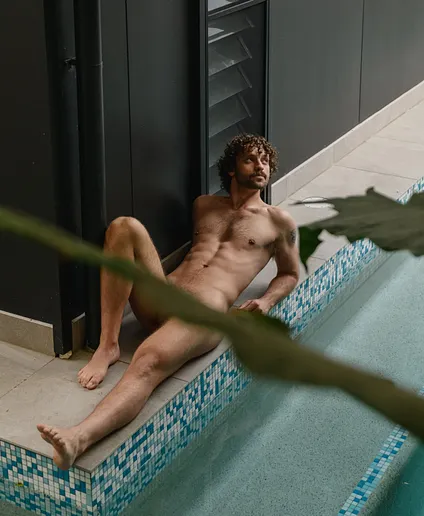
Bension Siebert is an award-winning investigative journalist and an independent sex worker. He is a former reporter for ABC News and InDaily, and former host of The Briefing news podcast. He lives in Naarm / Melbourne, on the traditional lands of the Wurundjeri Woi Wurrung people.
You can follow him on Instagram, TikTok and YouTube at @BensionFindsOut. If you’ve got a story that needs investigating, or you’re a disillusioned media professional with an interest in doing things differently, let’s talk.
Contact Bension on Signal @sources.90 or bensionsiebert@protonmail.com.
You can see Joel Devereux full (NSFW) photo series ‘The New DVRX’ at JoelDevereux.com.au